An eely important research project at Llangorse Sailing Club
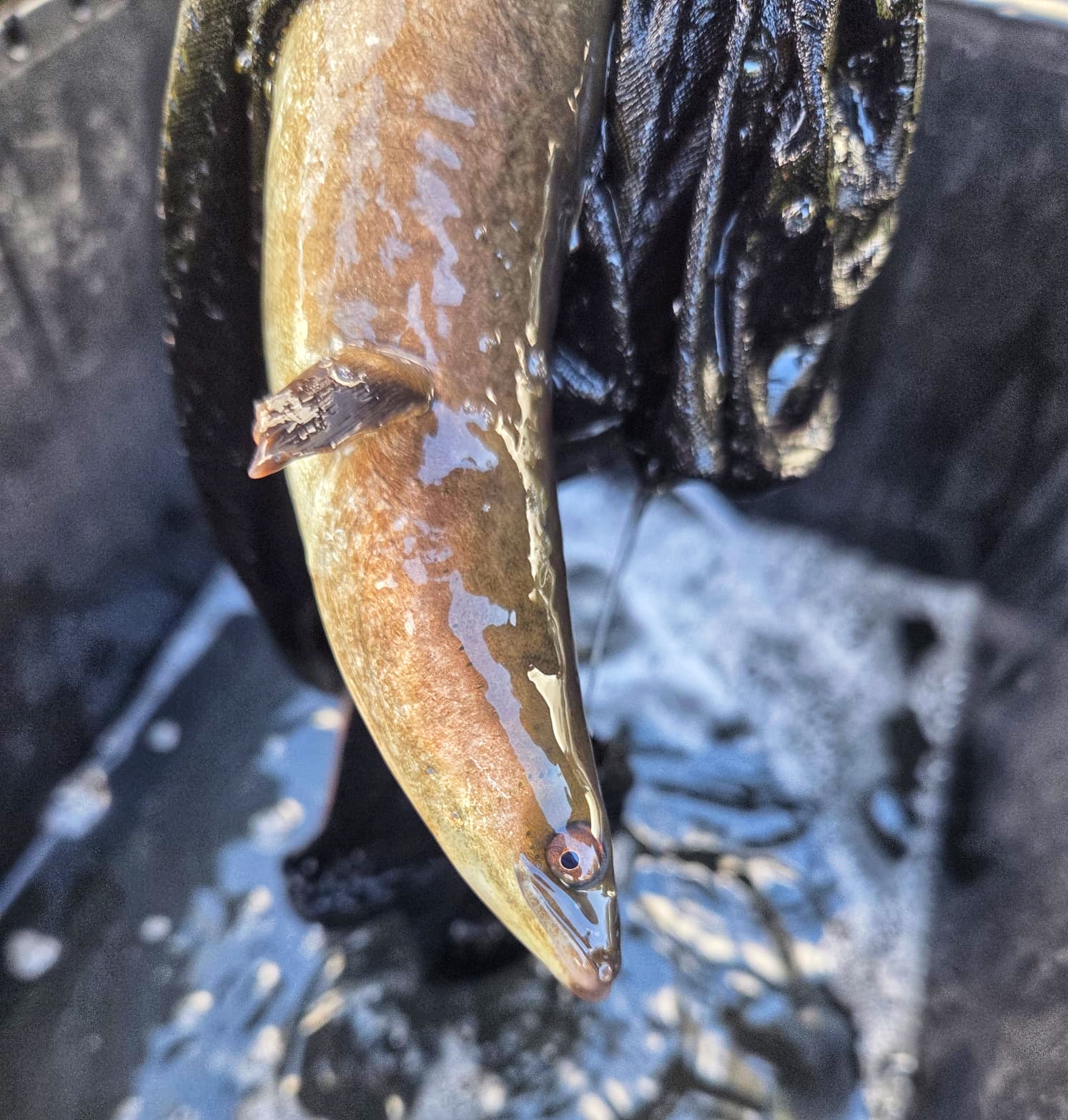
Llangorse S.C. is proud to be hosting a research project led by Natural Resources Wales (NRW) and Swansea University to generate vital information to protect European eels. The project is collecting data to support conservation and inform fishery policy and regulatory decisions for major marine developments downstream and in the Bristol Channel.
Vice Commodore, Robert Dangerfield says, “The Club has supported various projects to re-introduce and monitor eels in the past, and we have worked together with NRW to further understand water quality, water-movement, habitat-protection and management of non-native species. We’re delighted to play a small part in conservation and shaping the lake’s future. We hope the work will be successful and lead to further partnership projects in the future.”
Part of work focusing on other species, the eel project looks to understand the size and health of the eel population – and the capacity for breeding eels to make their way out of the lake into the Wye and out to sea. Eels are being carefully trapped, measured and assessed, and tagged before release.
The work has been funded by the Nature Networks Fund and being delivered by the Heritage Fund on behalf of the Welsh Government.
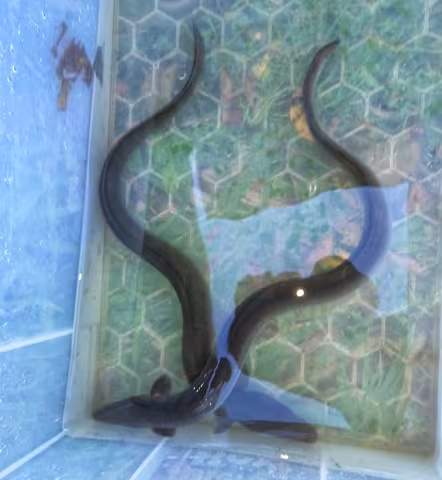
The image of two eels in apparent mirror image - might become a logo for the project?
Historically, Llangorse Lake has been a well-known habitat for eels, and in the deeper past they were fished for food. The lake’s historical “monster” the “afanc” could be a giant eel, although other species are also candidates.
Today European eels are listed as “critically endangered” on the International Union for Conservation of Nature (IUCN) red list due to a 95 per cent decline in the past 40 years. This is thought to be caused by fishing, pollution, habitat change. Two non-human related causes may be a non-native invasive parasitic worm (which is thought to have arrived in Europe in the 1980s), and locally at Llangorse possibly released mink which also severely affected other native animal species.
Fishing for all life-stages of eels was suspended by NRW (acting as the Welsh Government) in 2021. Eels which are caught by mistake must be released immediately in all parts of the UK.
European eels’ remarkable catadromous life-cycle – in which adults migrate from western European river estuaries into the Western part of the Atlantic known as the Sargasso Sea – has only relatively recently been proven. This project is intended to offer some clues about adult’s feeding-behaviour, their utilisation of river and marine habitats and emigration-paths.
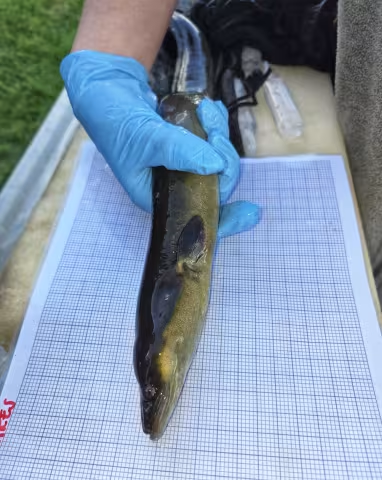
How long is an eel?
- Log in to post comments